


Build Better Money Control With Simple Daily Habits
- April 10, 2026
- 0
Discover how small daily money habits can help you stay in control of your finances, reduce stress, and build a more stable and confident financial lifestyle.



9621 Agnes Crossing, Lake Suzanneview, New Mexico Island 84604-9295.
Discover how small daily money habits can help you stay in control of your finances, reduce stress, and build a more stable and confident financial lifestyle.
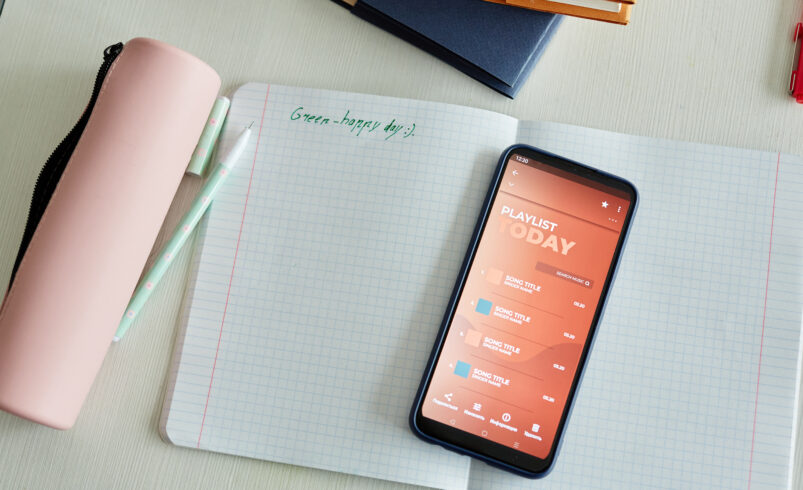
Improving your finances does not mean that you need to drastically change your approach. Actually, the biggest improvements in financial state appear from little things that you can perform on regular basis. Usually, many people think that being in charge of your money is linked to strict budgeting or earning a considerable amount, however, it is simply about having awareness.
Feeling like your money disappear really fast? In this case, you can find many people with such experience. This problem often arises because of certain habits that you are not aware of. Once you get knowledge of these habits, the problem may be solved.
In this article, you can find tips which will help you to develop daily habits that may significantly boost your ability to deal with your finances.
First of all, it is necessary to pay attention to how you use money on daily basis. Actually, it is often impossible to control your money since most decisions are made intuitively and automatically.
However, you should start by writing down everything you spend. It is not necessary to use a computer. A simple notebook and pen would be great or even a note in your smartphone.
By doing this, you will notice certain spending habits that you were unaware of before. For example, you may notice that you spend money on certain types of purchases that you could not notice otherwise. It helps you to identify spending areas and make changes.
It is obvious that with improved awareness, you will be able to control your expenses easily.
Daily spending limit is a wonderful tool that will influence your ability to use money properly. Actually, by applying a daily limit on your spending, you will be able to control yourself in case you want to spend a lot.
The main thing you need to do is to identify how much money you are able to spend per day after covering necessary payments and savings.
With this strategy, you will think twice before purchasing anything. Moreover, in case you exceed the limit, you can decrease it in the following day.
As you see, such approach is extremely easy and helpful.
Actually, you do not need to save a lot of money. With small habits that you can form easily, you will be able to accumulate enough money to ensure your financial comfort.
First of all, you may try to save your daily remainder. Additionally, you can allocate a fixed amount of money on daily basis to be used for savings.
Moreover, you will be able to save money simply because you did not buy something unnecessary. Such simple habit will become natural for you with time and ensure long-term financial stability.
Probably, one of the biggest problems in terms of spending control appears from impulsive behavior. It happens when you buy something without thinking about it. To avoid this, you will need to think carefully before deciding whether you need it or not.
Actually, such purchases often appear because of spontaneous desires that arise due to certain circumstances. That is why it is useful to give some time between buying and your decision.
Additionally, you can simply stay away from those places where you tend to impulse. Avoid visiting shopping websites if you have nothing to do.
It is important to analyze your behavior and realize what can cause the development of impulsiveness.
At the end of each day, you will need to analyze the previous one. It is important to understand whether you spent money on proper things.
Thus, you will review how much money you have spent during the day and compare the expenditure with the daily limit. In case you stayed within the budget, this is great. Otherwise, it means that you will need to identify the reasons and prevent similar outcomes in the future.
It is useful to keep in mind that such analysis is a tool for self-improvement, and there is no need to blame yourself.
Thus, you can develop new financial habits to improve your skills in controlling finances. Pay attention to your expenditure, have a daily limit, save a bit and avoid impulsive purchases.
These tips may help you to feel comfortable about using money and developing financial security. Do not worry because such tasks are relatively simple but have huge effect in the long term.


I’m passionate about helping people simplify their financial lives. I share practical tips on managing money, reducing debt, and building smart habits for long-term success. My goal is to make finance easy to understand and apply in everyday life.