

Create A Stress Free Budget That You Can Stick To
- April 10, 2026
- 0
Learn how to build a simple and stress free budget that fits your lifestyle and helps you manage money better without feeling restricted or overwhelmed daily.



9621 Agnes Crossing, Lake Suzanneview, New Mexico Island 84604-9295.
Learn how to build a simple and stress free budget that fits your lifestyle and helps you manage money better without feeling restricted or overwhelmed daily.

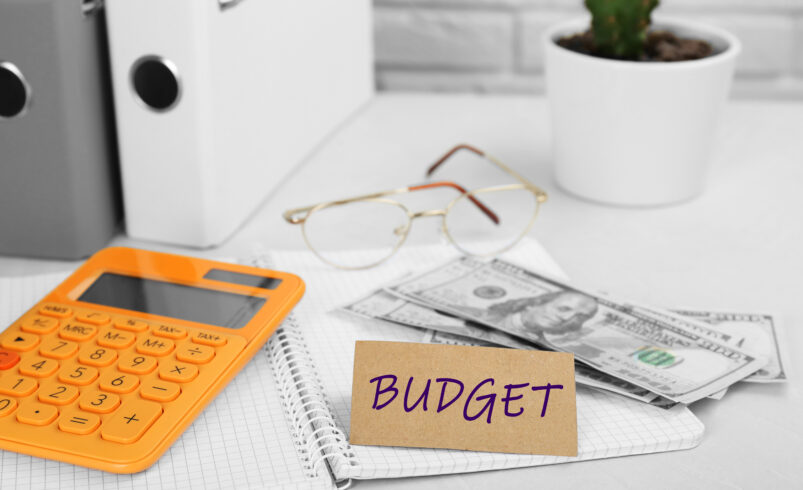
When it comes to budgeting, many people experience some stress. The reason lies in the common perception of budgeting as an obligatory task that presupposes following some rigid rules. As a result, this type of activity makes a person feel overwhelmed even before he or she begins. Nevertheless, a well-organized budget must bring relief rather than cause stress.
It is important that your budget fits your routine perfectly. First of all, it must seem natural and effortless to use. In addition, a well-organized budget is always flexible and easily manageable. If it does not require too much effort to maintain, you will be willing to use it regularly.
Unfortunately, people stop budgeting quite frequently. The point is that when one creates a budget, he or she strives to do it properly from the very beginning. Therefore, a person tends to create overly elaborate schemes, which turn out to be difficult and time-consuming to follow. In the end, the individual is unable to stick to this plan and leaves budgeting behind.
In this regard, this blog will help you create an effective but stress-free budget. With the proper approach, budgeting can be an excellent practice that benefits you.
If you want to reduce your stress levels, you should keep things simple. In particular, your scheme cannot be too complicated and include numerous categories.
First of all, divide your income into several segments. First of all, it concerns basic expenses, such as paying your bills, purchasing groceries, renting, etc. Then you should set aside the money to save. Finally, there is the last portion of your salary that can be used as you wish.
Such an elementary division of your money allows you not only to allocate your resources in the most efficient manner but also to make some adjustments when needed.
While budgeting, you should be careful not to put yourself in a position when you face a choice between sticking to your plan and doing what you find more convenient. Such an attitude will prevent you from following the budgeting rules.
That is why it is vital to create a simplified scheme first and then to refine it gradually. The more natural your budget is, the better.
It is especially critical when the scheme is clear and comprehensible.
As mentioned above, you should never create an artificial budget. Otherwise, you will hardly be able to follow it. It is vital to be totally honest with yourself and create a budget in accordance with your spending habits.
Therefore, spend some time observing your routine to get a clearer picture. Pay attention to those expenses that occur quite often. Besides, try to establish their exact amount.
Such an analysis will allow you to come up with more realistic estimates, which, in its turn, will facilitate the budgeting process.
While trying to improve their budget, people tend to expect immediate results. However, it is wrong since any significant financial transformations take some time. If you do not understand this, you will put yourself under additional stress.
For instance, you may notice that you waste too much money on unnecessary goods. Instead of trying to get rid of this expense completely, start reducing it slowly. In this way, the changes will appear to be less dramatic.
Gradual changes are much easier to adopt and sustain in the long run.
Any budget can fail when there is no room left for the unforeseeable events. Unexpected situations are inevitable, so you should be ready for them.
Try to include a certain percentage of your total income in case of an emergency. This money can be saved to cover unforeseen expenses related to car repairs or sudden visits to the doctor.
Preparedness prevents stress, which is crucial when you are creating a budget.
Reviewing is important when it comes to budgeting. However, you should approach this aspect of planning with caution and avoid putting too much pressure on yourself.
It is enough to choose a regular interval for reviewing, which could be weekly or monthly. On that day, check how you spend money during the past period.
In addition, do not strive for perfection. It is better not to analyze each of your expenditures in detail.
The secret to a good budget lies in making it simple and appropriate for your daily routine. Start with a simplified budget and refine it further. Be aware of your expenditures and introduce changes gradually. Make sure to prepare for unforeseen expenses. Do not pay excessive attention to reviewing.

I’m passionate about helping people simplify their financial lives. I share practical tips on managing money, reducing debt, and building smart habits for long-term success. My goal is to make finance easy to understand and apply in everyday life.