

Build A Practical Budget That Matches Your Daily Life
- April 10, 2026
- 0
Learn how to create a practical budget that fits your real daily routine, helping you manage money smoothly and stay stress-free every month.



9621 Agnes Crossing, Lake Suzanneview, New Mexico Island 84604-9295.
Learn how to create a practical budget that fits your real daily routine, helping you manage money smoothly and stay stress-free every month.
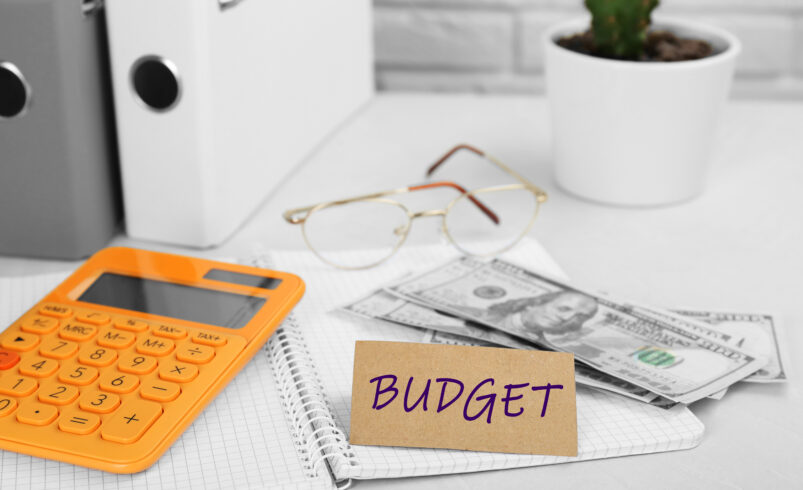
One should treat budget as a tool, not strict rules to follow. People tend to create budgets which do not match their life realities and, therefore, abandon them shortly after starting to apply them.
The truth is rather obvious. As soon as one learns how to develop a practical budget, he/she succeeds in saving money. The budget should match one’s routine, needs and lifestyle.
The chances are very high that many of you created a budget before and gave up applying it after several days. The reason for that was that budget was too unrealistic.
Below you will learn how to design a realistic budget which will easily integrate with your everyday life.
To develop an efficient budget, it is vital to know one’s daily routine and behavior.
It is necessary to pay attention to the peculiarities of one’s expenses. Some people spend more money in certain periods, while others prefer doing shopping in the evenings.
For several days or even for a week, you need to record your daily financial behavior and expenditures. You will see what habits cost you money and how much they cost.
It is necessary to get acquainted with one’s behavior to understand his/her needs and preferences.
Once you understood your daily routines and habits, you should design your personal budget which will suit you well.
First of all, it is important not to ignore your habits and wishes. It means that some expenses, which you used to have, must be taken into account and included in the budget.
Income should be divided into several categories (essentials, savings and personal expenses). Thus, your budget will be more efficient.
This way of creating a budget is called practical. This means that you need to develop a budget according to your preferences and needs.
Your budget will be easy to follow since you will try to make no sudden changes and alterations.
Sometimes people decide to make great changes in order to economize. However, such an attempt always ends with failure.
The thing is that it is easier to make minor changes than large ones. For instance, it is easier to give up purchasing unnecessary goods than change drastically one’s habits.
Small changes and alterations in expenditure bring noticeable effect without making a person feel stressed and uncomfortable.
Such a gradual approach will be useful in developing good financial habits.
One’s budget should not be rigid since one’s income and expenses usually undergo changes.
Therefore, it will be wise to develop an adjustable budget which could be easily adjusted according to your current income.
You would not be upset by any changes and alterations since the budget was developed realistically. Moreover, it will not cause disappointment.
To avoid such problems, one should review a budget from time to time.
Thus, a flexible and realistic budget will bring noticeable effect.
Expense tracking plays a vital role in budgeting. Fortunately, people do not need to waste much time on such monitoring since it may be done in an easy and simple way.
One can choose from various tools to monitor expenditures and incomes. You will not spend much time if to take into account all your expenses only occasionally.
Monitoring of your expenditures will help you to follow the budget and become aware of your spending.
With time, such expense tracking will turn into a habit.
Practicality is a key to successful budgeting. A practical budget corresponds to a person’s life and habits and, therefore, it does not require strict discipline.
The main rule consists in the necessity to understand one’s routine and habits first, and then design a budget in accordance with them.
Make only minor adjustments in the process of using a budget. Moreover, it is important to track all expenditures from time to time.

I’m passionate about helping people simplify their financial lives. I share practical tips on managing money, reducing debt, and building smart habits for long-term success. My goal is to make finance easy to understand and apply in everyday life.