


Smart Budget Habits That Help You Save More Every Month
- April 10, 2026
- 0
Learn smart budgeting habits to save more money each month while keeping your daily spending under control and your financial life stress-free.



9621 Agnes Crossing, Lake Suzanneview, New Mexico Island 84604-9295.
Learn smart budgeting habits to save more money each month while keeping your daily spending under control and your financial life stress-free.
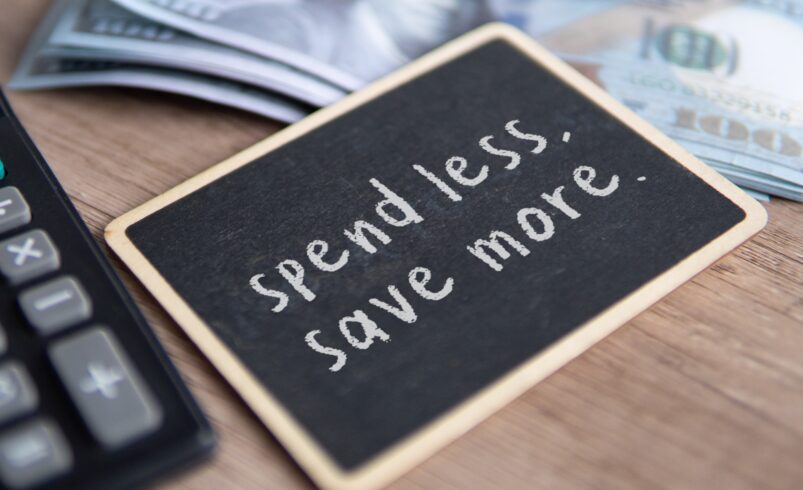
Budgeting is one of the best ways to develop positive financial habits. However, many individuals focus exclusively on increasing their earnings, failing to pay attention to their existing income. Good budgeting habits ensure sufficient savings, reduce stress levels, and help one control finances.
Saving can appear to be a challenging endeavor, particularly if someone believes that their earnings cannot cover all of their expenses. Nevertheless, little efforts may bring tangible results in the long-term perspective.
Once budgeting becomes an automatic process, it stops being an obligation and a responsibility. In other words, people can incorporate this habit into their lives relatively easily.
In this blog, readers will discover efficient budgeting practices that can be applied to increase monthly savings while remaining consistent.
Saving as a priority is the first habit that may prove to be extremely useful for someone who wants to allocate funds for various purposes effectively. Instead of trying to preserve money after paying for their expenses, people should start saving as soon as they get paid. Consequently, such a habit will become automatic.
Moreover, although individuals may start with saving a minimal percentage of their earnings, these efforts may yield substantial results eventually. In addition, such practices will teach individuals to manage the remaining amount of money adequately.
Thus, people will be able to adjust their expenditures to the available amount automatically.
Individuals should develop strict spending boundaries that will enable them to prevent wasteful expenditure. Without establishing limits, people may spend additional money, thus making it impossible to save anything.
For instance, individuals need to estimate the amount that should be allocated for food, shopping, and recreation. Subsequently, people must adhere to these boundaries to ensure that they are not overspending.
As a result, individuals will not experience problems while choosing goods or services since these limits will guide their behavior.
Moreover, the presence of boundaries may make it easier for people to spot situations in which they waste money. Such observations will allow them to manage their finances properly.
Many individuals tend to neglect minor expenditures, failing to realize that these transactions may impact their budget significantly. People buy snacks, coffee, or inexpensive goods online almost every day, thereby wasting money without realizing this fact.
However, once people monitor their expenditures, they will notice that they are spending considerable sums on unnecessary products. Subsequently, they will be able to identify the source of potential losses and make simple corrections.
Thus, people will gain additional savings and become more efficient managers in the long-term perspective.
Individuals tend to make unplanned purchases impulsively; these expenses can significantly reduce the amount of funds available for savings. In most instances, individuals do not need such products and acquire them merely because of emotional impulses.
To avoid unnecessary purchases, people need to introduce a simple habit into their lives: whenever they are about to buy something that they have not planned, they should stop and think about whether they really need it.
In most cases, individuals will understand that they could live without this product and not spend additional money. Thus, such a simple habit can be highly effective at reducing expenditures.
People should regularly monitor the progress of their financial activities to determine whether they are achieving their goals. Individuals may set a specific time for checking their budgeting practices.
Moreover, it is essential to assess their performance carefully and identify situations in which they made mistakes. As a result, readers will be able to improve their skills continuously.
Monitoring does not require excessive efforts. It suffices to check one’s budget regularly and determine whether it meets requirements.
Maintaining the abovementioned habits requires a significant level of discipline; however, it may be achieved with time. Initially, it may appear extremely challenging for individuals to follow all of the budgeting practices.
Nevertheless, they should persist and continue their efforts despite difficulties. Eventually, these efforts will pay off and yield tangible results.
Moreover, people will learn how to control their spending and save more money regularly. As a result, readers will be able to manage their finances efficiently and achieve their goals.
The introduction of certain budgeting habits may help individuals manage their finances efficiently. Readers may start prioritizing savings, establishing spending boundaries, monitoring minor expenditures, refraining from impulsive purchases, and monitoring their budget. Regular practice and discipline will allow people to achieve desirable results.

I’m passionate about helping people simplify their financial lives. I share practical tips on managing money, reducing debt, and building smart habits for long-term success. My goal is to make finance easy to understand and apply in everyday life.